


The information on this page is excerpted with generous permission from Christopher James’ book "The Book of Alternative Photographic Processes" - now in it's THIRD edition! www.ChristopherJames-Studio.com
.jpg) A Little History
A Little History
The cyanotype was the first simple, fully realized, and practical non-silver iron process. Discovered by Sir John Herschel (1792-1871) in 1842, a mere three years after the “official” announcement of the discovery of photography, the cyanotype provided permanent images in an elegant assortment of blue values. Herschel is the same gentleman who coined the words "positive and negative", "photograph" and "snapshot".
Anna Atkins: The First Woman Photographer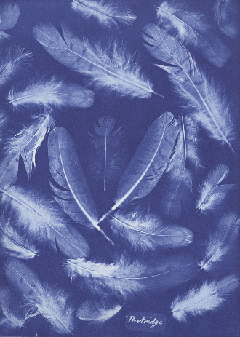
Anna Atkins (1799-1871) is referred to sparingly by traditional photo historians; she made beautiful cyanotype images of algae, ferns, feathers, and waterweeds. The Atkins and Herschel families resided only 30 miles apart in Kent, England, and herbotanist father, John George Children, and Herschel were friends. John Children was a member of the Royal Society, and when his friend Herschel announced his discovery of the cyanotype (1842), Children quickly passed the news on to his daughter Anna. Although there is no conclusive evidence that Herschel was Atkins' mentor, it is more than probable that she learned the cyanotype process in the Herschel household. If not fact, then at least it's a romantic concept.
Anna Atkins made thirteen known versions of her work entitled "British Algae: Cyanotype Impressions" (1843-1853). In October 1843, Atkins began publishing folios of her photogenic (photogram) drawings. In 1850, she began to publish more comprehensive collections of her work, completing a three volume anthology in 1853. These books, containing hundreds of handmade images, were the very first published works to utilize a photographic system for scientific investigation and illustration. Although Atkins published in 1843, Talbot’s Pencil of Nature (1844-1846), is generally credited by historians as the first to have achieved this important milestone.